
Serving Beyond the Uniform: Why the Election Assistance Commission Matters to Veterans
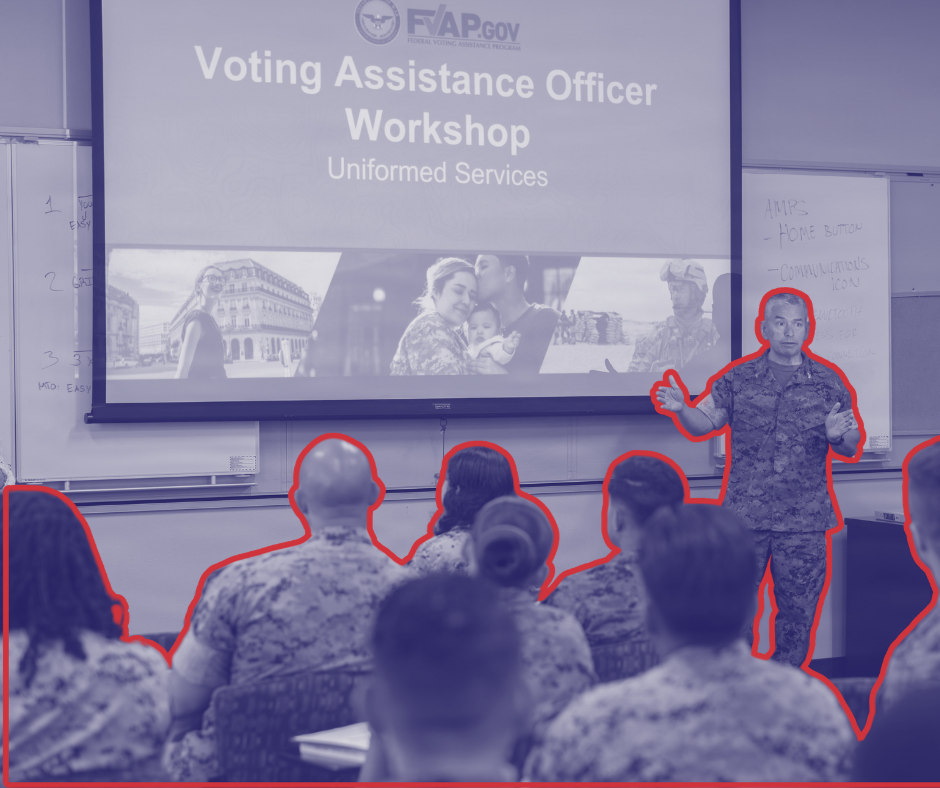
U.S. Marine Corps Col. Ernest Govea, chief of staff with Marine Corps Installations West, Marine Corps Base Camp Pendleton, speaks to Marines before a voting assistance officer workshop at MCB Camp Pendleton, Calif., May 14, 2026. The workshop, held by the Federal Voting Assistance Program, aims to train and prepare voting assistance officers to help U.S. citizens and military members cast their absentee ballots in U.S. elections. (U.S. Marine Corps photo by Sgt. Dillon Buck)
When we took our oath to support and defend the Constitution, that commitment didn't come with an expiration date. For the more than 16 million veterans and military family members across the nation, our service simply takes on new forms in civilian life. Whether that means serving as poll workers through Vet the Vote, stepping up in local public service, or strengthening our communities through civic participation.
A crucial part of protecting our election process is understanding how it stays secure, transparent, and accessible. That's where an independent federal agency called the U.S. Election Assistance Commission (EAC) plays a pivotal role behind the scenes.
As a nonpartisan organization dedicated to country over party, we believe that an informed public is a resilient public. Here is what every veteran and military family member should know about what the EAC is, how it operates, and why its work matters to our community.
What is the EAC?
Created by Congress under the Help America Vote Act (HAVA) of 2002, the EAC is an independent federal commission tasked with helping state and local election officials administer secure and accessible elections.
By law, the EAC is structured to be strictly bipartisan: it's meant to be led by four commissioners, split evenly between the two major parties, nominated by the President and confirmed by the U.S. Senate. That design exists so no single party controls decisions about how Americans vote.
As of this writing, all four commissioner seats are vacant. One seat had already opened earlier in 2026; in July, the two Democratic commissioners were removed from their posts and the remaining Republican commissioner departed shortly after. Without commissioners in place, the EAC currently lacks the quorum HAVA requires to take certain actions, such as approving new voting system certifications.
Regardless of who holds these seats at any given time, the bipartisan structure itself reflects a core principle: confidence in elections shouldn't depend on which party is in charge. That's why this vacancy matters to every voter, veteran or otherwise, and why filling these seats with qualified, Senate-confirmed commissioners is worth watching.
What Does the EAC Actually Do?
Think of the EAC as a force multiplier for local election administration. While state and local governments actually run elections in America, the EAC provides national standard-setting, research, and technical support.
1. Testing and Certifying Voting Systems
Before voting equipment touches a polling site, it undergoes comprehensive testing. The EAC establishes the Voluntary Voting System Guidelines (VVSG) and accredits independent laboratories to test hardware and software for physical security, cybersecurity, accuracy, and accessibility.
2. Supporting Overseas and Military Voters
For service members deployed overseas or families stationed far from their home states, exercising the right to vote presents unique logistical hurdles. The EAC works alongside federal entities like the Federal Voting Assistance Program (FVAP) to share best practices with local election offices, helping ensure military absentee voting remains reliable and timely.
3. Serving as a Resource Hub for Local Officials
From recruiting poll workers to improving physical security at voting sites, the EAC acts as a central clearinghouse of research for the nation's 10,000+ local election jurisdictions. Every two years, they publish the Election Administration and Voting Survey (EAVS), offering data-driven insights to improve election operations nationwide.
4. Administering Federal Grants
The EAC distributes federal HAVA funds directly to states to modernize voting systems, strengthen cybersecurity defenses, and improve polling place accessibility for voters with disabilities.
Why the EAC Matters to Our Community
At Vet the Vote, we view trust in our institutions as essential to national security and civic unity. Respect for free, fair, and secure elections isn't a partisan stance, it is a bedrock principle of the republic we swore to defend.
Understanding the systematic safeguards built into our election process, like the independent testing, standards, and resources overseen by the EAC, gives us all greater confidence in the system. It also reinforces a core truth: our government is sustained by active participation.
Whether you're stepping up as a poll worker on Election Day, helping fellow veterans register to vote, or countering information operations in your local community, your voice and leadership continue to shape the future of our nation.